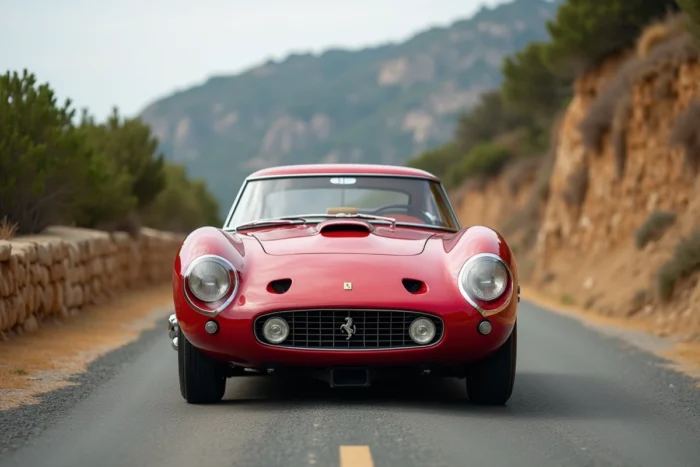
The market for rare cars is no longer limited to a handful of classic Ferraris sold at auction. In 2026, the notion of automotive rarity extends to youngtimers newly eligible for collector status, supercars emerging from private collections after decades of obscurity, and models whose values fluctuate with a generally declining used car market. Understanding what makes a vehicle truly sought after requires going beyond a simple count of produced units.
Provenance and documented history: the true filter of automotive rarity
Limited production alone is no longer enough to make a model a coveted piece. Recent sales and specialized content show a shift: interest is increasingly focused on vehicles with a documented history, low mileage, or unique provenance. A supercar hidden for decades in a private collection, then revealed with a complete maintenance log and a barely used odometer, reaches price levels that the same model without traceability will never see.
This phenomenon redefines the hierarchy among models. A vehicle produced in a few hundred units but with a vague history loses ground to a better-documented example from a less exclusive series. For seasoned collectors as well as investors, rare and sought-after cars stand out primarily for the quality of their traceability, not just for their production volume.
A complete and verifiable history weighs as much as the number of units produced. This is a criterion that classic rankings underestimate, but which the market fully integrates into its pricing.
Collector registration in France: models from 1996 join the dance
The French “collection” status mechanically expands each year. In 2026, it is the vehicles from 1996 that reach the 30-year mark and become eligible for collector registration, provided they have remained close to their original condition. This new wave of youngtimers alters the landscape of sought-after models.

Models produced in series at the time but now rarefied (because many have been destroyed, modified, or exported) gain a regulatory status that opens up practical advantages:
- A technical inspection spaced every five years, reducing administrative maintenance burdens for owners
- The ability to circulate in certain low-emission zones (LEZ), where a classic thermal vehicle of the same age would be prohibited
- Official recognition that facilitates specific insurance and enhances resale value
However, professional or commercial use remains prohibited for a vehicle registered as a collection. This regulatory framework clearly directs these cars towards leisure use and heritage preservation.
Declining used car market: what effect on rare cars in 2026
Prices in the French used car market have been following a downward trend since the beginning of 2026. Recent models aged two to four years are depreciating faster than in previous years. Does this dynamic affect rare vehicles in the same way?
The available data does not allow for a uniform conclusion. Recent models are losing value more quickly than before, but vehicles with very limited production runs or with a competitive pedigree seem to evolve according to their own logic. Perceived rarity, fueled by provenance and condition, creates a price floor that the general economic situation does not erode at the same pace.
For a buyer, this period may represent a window of opportunity for certain sought-after models whose sellers, pressured by a less buoyant market, are accepting more open negotiations. The situation varies by segment: some (2000s supercars, limited production European GTs) see their prices stabilize, while others (1990s Japanese sports sedans) continue to rise, driven by strong international demand.
Ferrari 250 GTO and Bugatti Type 57SC Atlantic: what sales records reveal
The Ferrari 250 GTO remains the absolute reference in terms of valuation. Produced in only 36 units between 1962 and 1964, it meets all the criteria: confidential production, competitive pedigree (category wins at the 24 Hours of Le Mans in 1962 and 1963, wins at the Tour de France Automobile in 1963 and 1964), and individual tracking of each chassis. Prices generally exceed 30 million euros, but vary according to race history and the condition of each unit.
The Bugatti Type 57SC Atlantic, created in 1936, illustrates another aspect of rarity: the historical and technical importance of a model of which only a handful of units remain. Its design and context of creation make it an object whose value far exceeds the automotive market, touching that of art and industrial heritage.
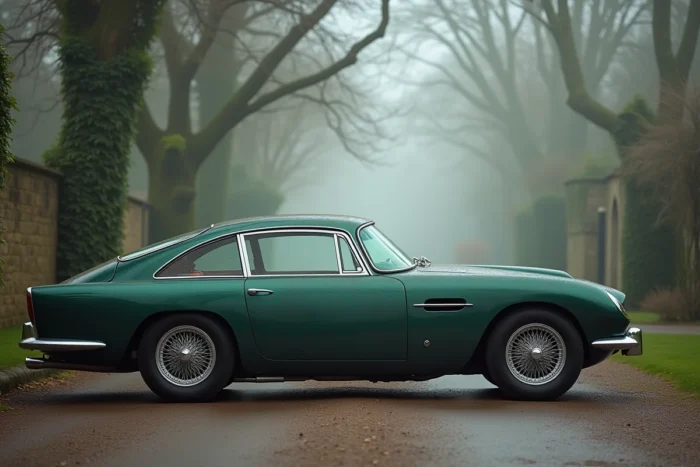
These two models represent extreme cases. The majority of sought-after rare cars are well below these price levels, but the mechanisms that support their value are identical:
- Verifiable and documented production, with a known and tracked number of units
- A link to motorsport or a significant historical event
- An original condition or a restoration in accordance with the manufacturer’s specifications
- Traceable provenance, ideally with a history of known owners
Supercars and private collections: the market for hidden vehicles
A recent phenomenon is reshuffling the deck: the market introduction of supercars kept for decades in private collections. These vehicles, sometimes barely broken in, reappear with minimal mileage and a state of preservation that even a restored model cannot match.
The enthusiasm for these cars with very low mileage shows no signs of waning. Some barely drive a few hundred kilometers a year, placing them in a unique category, between collectible objects and heritage investments. Brands like Ferrari, McLaren, or Porsche dominate this segment, but lesser-known manufacturers (Alfa Romeo, Aston Martin on certain series) also attract the attention of informed enthusiasts.
The underlying trend remains that of a market that values authenticity and documentation as much as mechanics. The most exclusive models are not always the most expensive or the oldest: they are those whose complete story can be told, piece by piece, owner by owner. This criterion separates a rare car from a simply old car.