You have a paintbrush hardened with gloss paint in one hand, a glue stain on a work surface in the other. Under the sink, two cans: acetone and white spirit. Which one to grab? These two solvents work differently, and choosing the wrong product can damage a surface or simply be ineffective. Understanding what separates them can save time and protect your materials.
Solvent polarity: the deciding criterion
Before discussing uses, a technical point needs to be clearly established. Acetone is a so-called polar solvent. White spirit is non-polar. This distinction radically changes what each product can dissolve.
A polar solvent attacks resins, glues, water-based varnishes, or acrylic paints. A non-polar solvent dissolves fats, oils, and oil-based paints (gloss). When you understand the differences between acetone and white spirit from this perspective, the choice becomes almost mechanical: identify the nature of the substance to be treated, then select the solvent with the appropriate polarity.
A concrete example: a dried acrylic paint stain on tile will react to acetone, not to white spirit. Conversely, splashes of gloss paint on a metal tool will come off much better with white spirit.
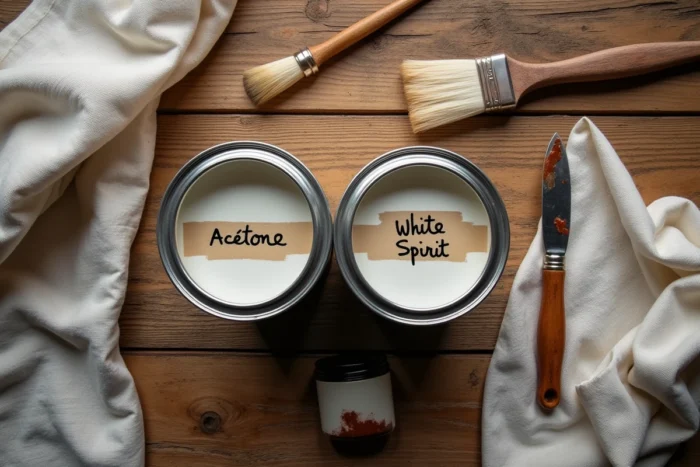
Acetone on a job site: speed and degreasing above all
Acetone evaporates very quickly. Its boiling point is around 56 °C, which means a thin layer disappears in just a few seconds. This volatility makes it the solvent of choice when you need a clean and dry surface immediately.
Use cases where acetone excels
- Degreasing a metal part before welding or gluing: the metal is ready in under a minute, with no greasy residue
- Removing glue traces (stickers, adhesives, masking tape residue) from glass or tile
- Cleaning acrylic paint or nail polish stains from a hard surface
Have you noticed that after using acetone, the surface feels perfectly clean to the touch? That’s due to the complete absence of greasy residue. White spirit, on the other hand, leaves a slight oily film that requires a second wipe.
The trap with plastics
Acetone attacks many common plastics, including polystyrene, plexiglass (PMMA), and ABS. It can soften, whiten, or partially dissolve them in seconds. Before using acetone on a synthetic surface, always test it on a hidden area. White spirit is significantly less aggressive towards most plastics.
White spirit for gloss paints: the right tempo
White spirit is a petroleum distillate with a typical distillation range between 150 and 200 °C. As a result: it evaporates much more slowly than acetone, taking several minutes depending on conditions. This slowness, often seen as a drawback, is actually an advantage for certain painting tasks.
When you dilute a gloss paint, white spirit gives it enough working time to spread the product, correct drips, and achieve an even finish. Acetone, being too fast, would dry the paint before you even finish your roller pass.
Cleaning tools after oil paint
Brushes, rollers, and trays used with gloss paint are cleaned with white spirit. Let them soak for a few minutes, then scrub the bristles or foam. Acetone would be ineffective here: it does not have the right polarity to dissolve the oily binders in these paints.
For acrylic paints (water-based), neither is necessary as long as the paint is fresh: water is sufficient. Once dry, acetone can salvage the situation on a tool, but the best option remains to rinse immediately after use.
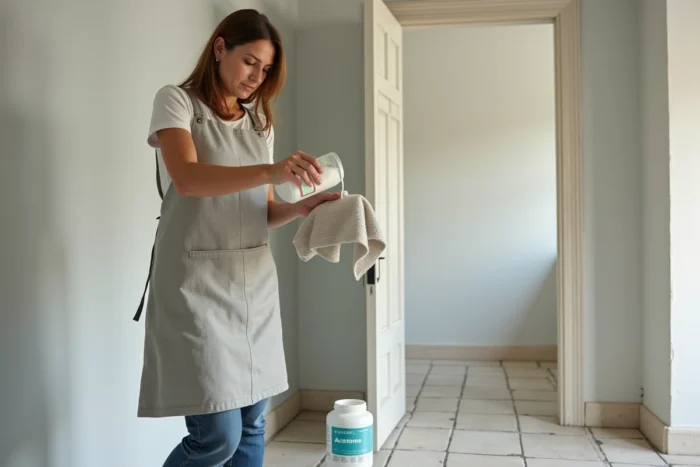
Safety and ventilation: two products, two levels of risk
Both solvents are flammable and irritating. Their handling requires precautions, but not the same ones.
Acetone is extremely flammable (very low flash point). Its vapors, heavier than air, accumulate at ground level. In a poorly ventilated space, they can ignite upon contact with a simple spark, including that from a light switch. Prolonged inhalation causes headaches, dizziness, and irritation of the respiratory tract.
White spirit presents a lower fire risk, but its vapors are neurotoxic with repeated exposure. Petroleum solvents are classified among substances that can affect the central nervous system during chronic exposures.
- Always work in a ventilated space, ideally outdoors or with a window open and a draft
- Wear solvent-resistant gloves (nitrile rather than latex, which acetone can penetrate)
- Store both products away from any heat source, in closed containers and out of sunlight
- Never pour these solvents down the drain: they are chemical waste to be disposed of at a recycling center
Summary table: acetone or white spirit depending on the task
| Task | Suitable solvent | Why |
|---|---|---|
| Degrease metal before gluing | Acetone | Rapid evaporation, zero residue |
| Dilute gloss paint | White spirit | Sufficient working time, good compatibility |
| Clean a brush (oil paint) | White spirit | Dissolves oily binders |
| Remove glue from glass | Acetone | Dissolving power on resins and adhesives |
| Remove tar or grease | White spirit | Effective on non-polar greasy substances |
| Clean plastic (PVC, plexiglass) | White spirit | Acetone may damage the plastic |
The choice between acetone and white spirit depends on two simple questions: what substance do you need to dissolve, and how quickly do you need the surface to be dry? The polarity of the product to be treated guides you towards one solvent or the other. In case of doubt about compatibility with a fragile surface, white spirit remains the safer bet, even if it means scrubbing a bit longer.