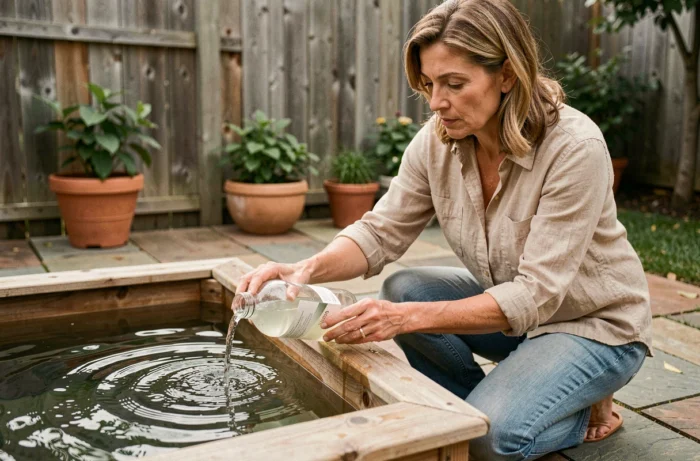
White vinegar dissolves limescale through an acid-base reaction: the acetic acid it contains transforms calcium carbonate into calcium acetate, which is soluble in water. This property makes it a logical ally for descaling a spa. However, it does not act as a disinfectant according to European regulations on biocides, which limits its role to only part of the maintenance.
White vinegar and acrylic: the risk that most tutorials ignore
Pure white vinegar, applied regularly to the shell of a rigid acrylic spa, can micro-scratch and dull the shine of the material over time. Concentrated acetic acid gradually attacks the surface varnish. On an inflatable PVC spa, the risk of degradation is lower, but prolonged exposure without rinsing can still alter the flexibility of the coating.
The basic rule is simple: always dilute. One volume of white vinegar to three to four volumes of warm water is enough to dissolve limescale deposits without damaging the surfaces. Apply the mixture with a microfiber cloth (never an abrasive sponge) and rinse thoroughly in the following minutes.
Before cleaning your spa with white vinegar, it is better to test the diluted solution on a less visible area of the shell. If the material whitens or loses its shine after drying, the concentration is too strong.
Descaling the waterline with white vinegar: method and limits
The waterline, that grayish circle that forms on the surface, concentrates limescale, sunscreen residues, and body fats. Diluted white vinegar acts on the limescale component, but it does not dissolve fats. If the line remains visible after using vinegar, the deposit is likely lipidic and requires a specific spa cleaner.
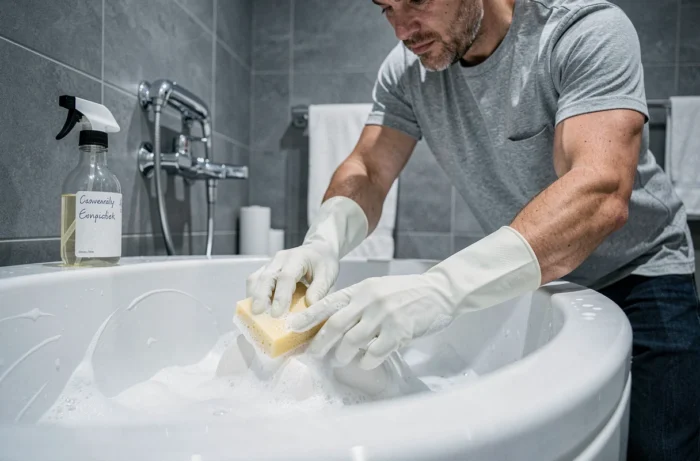
For pure limescale, soak a soft cloth in the diluted solution, apply it to the waterline, and let it sit for two to three minutes. Scrub without excessive pressure, then rinse with a jet or damp sponge. On a rigid spa, this action can be repeated weekly. On an inflatable spa, spacing it to once every two weeks reduces the risk of weakening the seams.
Spa filter and white vinegar: soaking or replacement
Soaking a filter cartridge in a bath of diluted white vinegar allows for the dissolution of mineral deposits that clog the folds of the filter media. The cartridge regains some of its flow, but this process has its limits.
- A filter clogged with organic matter (hair, algae, biofilm) will not be sanitized by vinegar, which does not have sufficient biocidal power on these residues.
- Soaking should not exceed a few hours: beyond that, prolonged acidity can degrade the synthetic fibers of the cartridge and reduce its filtration capacity.
- A cartridge that has undergone several cycles of vinegar soaking eventually loses its mechanical effectiveness. Replacing the filter remains necessary depending on the frequency of spa use.
After soaking, rinse the cartridge under a jet of clear water while separating each fold. Allow it to dry completely before reinstalling. Alternating between two cartridges allows for continuous filtration during cleaning.
Pipes and plumbing: why white vinegar is not enough
The internal pipes of a spa (pipes, jets, pump) accumulate a bacterial biofilm that white vinegar cannot eliminate. This biofilm, a thin viscous layer composed of microorganisms, adheres to the walls of the pipes and resists weak acids. Vinegar dissolves the limescale deposited on this biofilm but leaves the organic layer intact.
To purge the pipes, a specific rinsing product for spas, designed to detach the biofilm before draining, remains the only reliable option. This plumbing cleaning ideally takes place at each quarterly drain, circulating the product through the jet system for the time indicated by the manufacturer.
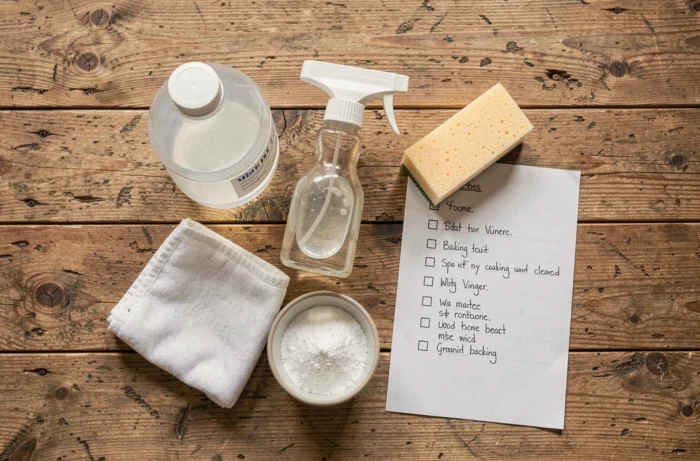
White vinegar can, however, be used to descale removable jet nozzles. Soak them in the diluted solution, scrub the orifices with a small soft brush, then rinse. This complementary action improves the flow of the jets without interfering with the chemical treatment of the water.
White vinegar and the pH balance of spa water
Pouring white vinegar directly into the spa water to lower the pH is a common but risky practice. Acetic acid causes the pH to drop sharply and is difficult to control, especially in the small volumes of water in a spa. Water with a pH that drops too low becomes corrosive to seals, the heater, and the metal components of the system.
pH correctors sold for spas (pH-) are formulated with dry acid (sodium bisulfate) that acts in a more gradual and measurable way. While white vinegar is suitable for cleaning surfaces out of the water, it should not be used as a chemical regulator in the filled basin.
- A stable pH for a spa generally falls between 7.2 and 7.6. White vinegar can drop this value well below in just a few minutes.
- Acetic acid is quickly consumed by the water, causing a rebound effect of the pH upwards in the following hours, making the adjustment unstable.
- Vinegar also introduces organic compounds into the water, increasing the workload of the disinfectant (bromine or chlorine) and potentially promoting turbidity.
White vinegar remains highly relevant for descaling the shell, thermal cover, and removable accessories. Its low cost and non-toxicity make it an effective surface cleaning product, provided that dilution and rinsing are respected. For anything related to the basin water, disinfection, and internal plumbing, dedicated spa maintenance products take over where acetic acid reaches its limits.