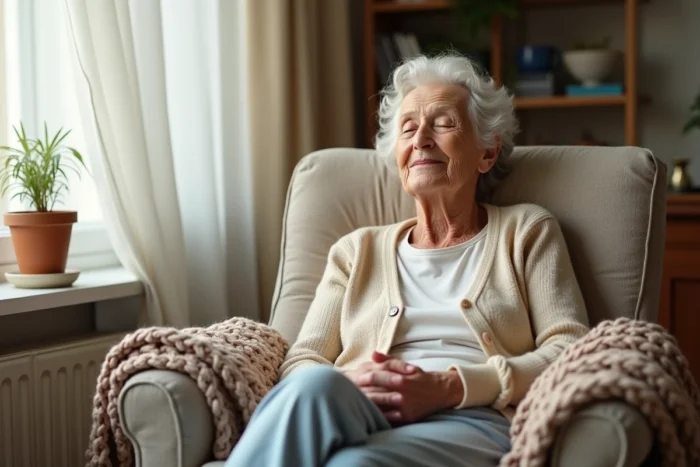
When an elderly person keeps their eyelids closed outside of sleep, those around them often think of drowsiness or a lack of interest. However, this reflex reflects specific physiological mechanisms related to ocular aging, medication use, or neurological impairments. Understanding these mechanisms helps guide care and avoid misinterpretations.
Ocular dryness and polypharmacy in the elderly
The tear film, this thin layer of liquid that protects the surface of the eye, loses stability with age. Tear production decreases, and evaporation accelerates. The result: burning, stinging, a sandy sensation. Closing the eyes provides relief by temporarily restoring the tear film, which explains the frequency of this gesture among those over 75.
What families often underestimate is the aggravating role of medication treatments. Antihypertensives, diuretics, antihistamines, certain antidepressants, and even antiglaucoma eye drops dry out the ocular surface. In someone taking several of these medications, dryness can become so pronounced that keeping the eyes open for extended periods becomes quite uncomfortable.
The indoor environment amplifies the problem. Heating in winter, air conditioning in summer, and direct ventilation reduce ambient humidity. When combining tear aging, polypharmacy, and dry air, the reflexive closure of the eyelids becomes a logical protective mechanism, not a whim. To better understand why an elderly person keeps their eyes closed, one must first check these three factors before looking for more complex causes.
Blepharospasm and ptosis: neurological causes of eye closure
When ocular dryness is not enough to explain the behavior, two neurological conditions deserve consideration.
Blepharospasm
Blepharospasm causes involuntary and repeated contractions of the orbicularis muscle, which surrounds the eye. The eyelids close spasmodically, sometimes for several seconds. This disorder, classified among focal dystonias, preferentially affects individuals over 60. It does not indicate a vision problem but a dysfunction of the basal ganglia.
Stress, fatigue, and bright light exacerbate episodes. Without treatment, blepharospasm can become nearly permanent and lead to functional blindness, meaning the person sees normally when their eyelids are open but cannot keep them open.
Age-related ptosis
Ptosis refers to the drooping of the upper eyelid. In the elderly, it most often results from a relaxation of the levator muscle of the eyelid (aponeurotic ptosis). The eyelid droops, reducing the visual field and forcing the head to tilt backward to compensate.
This ptosis is sometimes confused with drowsiness. The difference is simple: the person actively tries to keep their eyes open, furrows their brow, and raises their chin. Asymmetric ptosis (affecting only one eyelid) should raise concern, as it may indicate a more serious neurological issue, such as oculomotor nerve paralysis.
Cognitive disorders and sensory withdrawal in the elderly
In neurodegenerative conditions like Alzheimer’s disease or related dementias, eye closure often reflects a gradual sensory withdrawal. The brain, overwhelmed by processing visual information, reduces sensory input. Keeping the eyes closed decreases cognitive load.
This mechanism differs from the sliding syndrome, which combines a global withdrawal (nutrition, hydration, communication) with an identifiable triggering event. Isolated eye closure, without rapid deterioration of general condition, suggests:
- A neurosensory fatigue related to dementia, where the brain filters excessive stimuli
- An unexpressed visual discomfort, common when the person no longer verbalizes their symptoms
- A sedative effect of psychotropic treatments (benzodiazepines, antipsychotics), which lower the level of alertness
Observing the context is crucial. A person who closes their eyes in a noisy or brightly lit environment is likely reacting to sensory overload. A person who keeps their eyes closed constantly, even in a calm environment, requires a thorough medical evaluation.

Medical evaluation and concrete actions for caregivers
Before any interpretation, an ophthalmological assessment remains the first relevant reflex. It helps rule out or confirm advanced cataracts, glaucoma, severe dryness, or blepharospasm. The ophthalmologist can also measure the quality of the tear film with a quick and painless Schirmer test.
If the ocular assessment is normal, a neurological consultation is necessary to investigate pathological ptosis or dystonia. In the presence of known cognitive disorders, the geriatric team reevaluates the medication list to identify those that exacerbate dryness or sedation.
Caregivers can act on several environmental parameters:
- Maintain a sufficient ambient humidity in living spaces, keeping the person away from direct ventilation sources
- Adjust lighting to avoid bright lights or harsh contrasts between dark and lit areas
- Offer preservative-free artificial tears, upon medical advice, to relieve surface discomfort
- Observe and note the times of day when eye closure is more pronounced, which helps the doctor guide their diagnosis
Prolonged eyelid closure in an elderly person does not have a single cause. Ocular dryness, medication effects, and neurological conditions often accumulate. Identifying the contribution of each factor remains the only way to provide real relief, rather than considering this behavior as an inevitability of old age.